Published: 7 Nov 2025 | Updated: 5 Dec 2025


Can European Roulette really be beaten — or are these extraordinary wins simply products of their time?
From Victorian-era engineers to modern data-driven gamblers, roulette history is full of people who seemed to outsmart the wheel. Yet when you look closer, every legendary win tells the same story: chance, bias, and timing — not repeatable strategy.
Before today’s online roulette and live roulette were rigorously tested under UKGC standards, early physical wheels sometimes contained imperfections that clever observers could exploit. These rare cases shaped how online casinos and table games evolved into the fair, precision-balanced versions we know today.
In this article, you’ll discover:
- The legendary European Roulette players who made history
- How physical wheel bias once gave an edge — and why it no longer can
- The biggest one-spin wins ever recorded
- How UKGC regulation ensures modern roulette fairness
- Key lessons every player can take from these stories
|
Disclaimer: This article is for informational and historical insight only. All roulette outcomes are determined by certified RNGs or audited physical wheels. Always play responsibly. |
🏛️ The Golden Age of Roulette Bias
Before digital calibration and fairness testing, roulette’s earliest decades allowed for human error — and human advantage. This was the era when observation and mechanical insight occasionally tipped the odds.
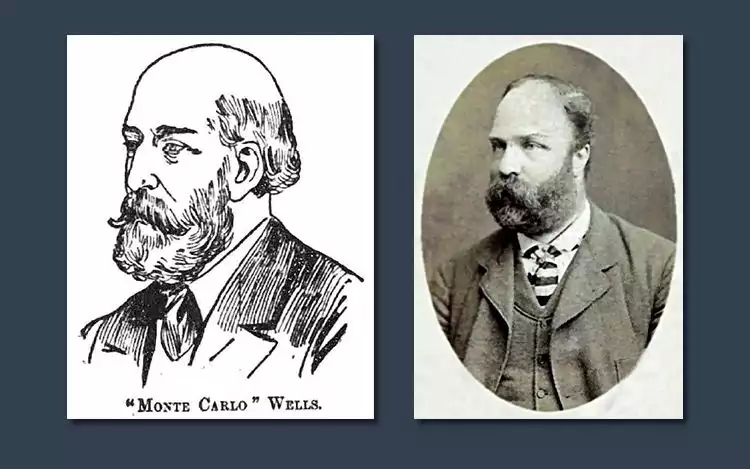
🇬🇧 Charles Wells – The Man Who Broke the Bank at Monte Carlo (1891)
British gambler Charles De Ville Wells turned £4,000 into over £60,000 in just a few days at the Monte Carlo Casino — winning so much that tables temporarily ran out of chips. The story inspired the phrase “breaking the bank.”
Back then, wheel bias, dealer patterns, and limited oversight made improbable streaks possible. Wells’ luck soon ran out, and he later served prison time for fraud — but his name remains one of the most famous in roulette history.
🇬🇧 Joseph Jagger – The Engineer Who Beat the Wheel (1873)
A mechanical engineer from Yorkshire, Joseph Jagger noticed that certain numbers appeared more often on specific wheels at Monte Carlo. After charting spin outcomes, he identified an imbalanced wheel and reportedly earned around £65,000 — worth millions today.
Casinos quickly learned from this and began rotating and re-levelling their wheels daily.
Lesson: Bias once existed. Today’s European Roulette wheels are inspected, rotated, and digitally tracked to eliminate imbalance.
🧠 Science, Data, and Statistical Advantage
As casinos modernised, analytical thinkers sought mathematical methods to identify bias. These players combined patience, data collection, and physics to turn observation into short-lived advantage.
🇩🇪 Dr. Richard Jarecki – The Roulette Physicist (1960s–70s)
A statistician and medical researcher, Dr. Richard Jarecki won more than $1.2 million by studying physical roulette wheels in Monte Carlo and San Remo. He recorded thousands of spins, identifying micro-imperfections invisible to the eye.
His findings prompted casinos to tighten maintenance protocols and introduce stricter wheel calibrations — the beginning of modern fairness testing.
🇪🇸 Gonzalo García-Pelayo – The Family Who Beat the Casino (1990s)
Spanish film producer Gonzalo García-Pelayo and his family manually recorded over 30,000 spins at Madrid’s Casino Gran Madrid. They noticed slight mechanical bias that tilted results toward certain number clusters, earning them more than €1.5 million before being banned.
Spain’s Supreme Court later ruled their method legal, since they exploited observation — not manipulation.
Lesson: Genuine statistical advantage once came from wheel bias. Modern RNG-based roulette and live casino sessions eliminate such predictability completely.
🎲 All or Nothing: The Single-Spin Legends
Some stories involve no bias or data — only improbable streaks that captured global attention.
🇬🇧 Ashley Revell – The Man Who Sold Everything (2004)
Selling all his possessions for about $135,000, Ashley Revell placed a single bet on red at the Plaza Hotel & Casino in Las Vegas. The ball landed on red 7, doubling his stake to $270,600.
He later launched a poker business and never repeated the stunt — a reminder that even big wins hinge entirely on probability.
🇬🇧 Chris Boyd – The $220,000 Spin (1994)
After saving for years, software engineer Chris Boyd wagered $220,000 on red at the MGM Grand. When it landed in his favour, the casino commemorated the moment by sealing the wheel under glass.
🇧🇷 Pedro Grendene Bartelle – The $3.5 Million Spin (2017)
Brazilian businessman Pedro Bartelle bet on a single number at the Hotel Conrad Casino in Uruguay — and won $3.5 million, one of the largest verified roulette payouts ever.
Lesson: These dramatic one-spin stories illustrate statistical extremes, not systems you can replicate.
🎬 The Pop Culture Moment
Even outside the casino floor, some wins became legend through storytelling. The most cinematic example blurs the line between myth and memory.
🇬🇧 Sean Connery – Triple Seventeen (1960s)
At Casino de la Vallée in Italy, Scottish actor Sean Connery reportedly bet on 17 three times in a row — and won each spin. While this streak sounds cinematic, its probability is roughly one in 50 million. Still, “17” became the quintessential James Bond number in roulette culture.

|
Important Note: These stories reflect historical conditions that are no longer possible under modern UKGC regulation. No system or method can influence or predict roulette outcomes. |
⚖️ Fairness Then vs. Now
Roulette once relied on physical craftsmanship — but today, precision engineering and digital certification ensure total fairness. When Jagger and Jarecki played, no formal testing governed roulette wheel performance.
Today’s European Roulette in the UK operates under UK Gambling Commission (UKGC) and eCOGRA oversight:
- RNG results in digital games must meet ISO/IEC 17025 randomness standards
- Outcomes in online roulette must be independent and non-predictable
- Physical wheels in streamed live roulette are tested, rotated, and monitored
- Audits verify that the 2.7% house edge aligns with published game rules — learn more in our guide to roulette house edge
No player can observe, detect, or exploit patterns on UK-licensed platforms. All systems claiming otherwise are mathematically invalid. Some unlicensed sites also advertise unrealistic promotions that imply better odds or guaranteed outcomes — something prohibited under UKGC rules.
🧭 Summary of Famous Wins
Across nearly 150 years of roulette history, a handful of players have managed to make headlines through skill, observation, or sheer luck. The table below summarises the most notable European Roulette wins, revealing how varied their approaches were — from exploiting wheel bias to placing one audacious spin.
|
Player |
Nationality |
Casino |
Win Amount |
Strategy |
Year |
|
Charles Wells |
UK |
Monte Carlo |
£60,000+ |
Pure luck |
1891 |
|
Joseph Jagger |
UK |
Monte Carlo |
£65,000 |
Wheel bias |
1873 |
|
Ashley Revell |
UK |
Las Vegas |
$135k → $270k |
Single spin |
2004 |
|
Gonzalo García-Pelayo |
Spain |
Madrid |
€1.5 M |
Statistical bias |
1990s |
|
Richard Jarecki |
Germany/USA |
Monte Carlo |
$1.2 M |
Statistical bias |
1960s–70s |
|
Chris Boyd |
UK |
Las Vegas |
$220k → $440k |
Single spin |
1994 |
|
Sean Connery |
Scotland |
Italy |
Unknown |
Luck |
1960s |
|
Pedro Bartelle |
Brazil |
Uruguay |
$3.5 M |
Single bet |
2017 |
💡 Learn from the Legends, Play Responsibly
These real-world stories capture the excitement that made roulette iconic — but none provide a blueprint for success. The math of European Roulette remains constant: every spin is independent, and outcomes are random.
Key lessons:
- All successes stemmed from historical bias or random variance
- Modern UKGC-licensed roulette cannot be influenced or predicted
- No system changes the house edge or spin independence
- Always treat roulette as entertainment, not income
- Use tools such as deposit limits and session reminders available across desktop and mobile versions of the platform
To learn more about game fundamentals, explore our educational guide on roulette strategy at Prime Casino.