Published: 9 Nov 2025 | Updated: 5 Dec 2025


Ever heard that you can “beat the wheel” with the right sequence of bets? Or that certain numbers are luckier than others?
Many of these ideas about European roulette have been circulating for decades—but few stand up to mathematical or regulatory scrutiny. In this guide, we’ll unpack the most persistent myths, explain where they come from, and show why European roulette remains one of the most statistically consistent roulette formats available.
In this article, you’ll learn:
- Six popular myths that mislead new and seasoned players alike
- How probability and randomness really work in live roulette
- Why regulated online casinos ensure fairness across every spin
- The truth about betting systems, hot streaks, and wheel bias
- What keeps European roulette fair under strict table games standards
|
Disclaimer: This content is for educational and informational purposes only. It does not promote gambling or suggest outcomes. Results in all casino games, including roulette, are random. Players should only use UK-licensed live casinos and play responsibly. 18+. For safer play advice, visit BeGambleAware.org |
Myth 1 – Betting Systems Guarantee Wins
Many players believe systems like the Martingale or Fibonacci can eliminate losses. The idea is simple: double your bet after every loss to recover when you finally win. But roulette outcomes are independent; each spin has no connection to the one before.
Why it’s false:
Roulette operates on pure chance. Even the European version with its single-zero layout and lower house edge compared with double-zero formats, the underlying probabilities remain unchanged. Progressive systems can lead to rapidly increasing stakes, which is why UKGC-licensed operators implement table limits. These limits support responsible play rather than providing a path to guaranteed outcomes.
Myth 2 – Previous Spins Affect Future Results
Known as the “Gambler’s Fallacy,” this myth assumes that if red has appeared five times, black is “due.” The reality is that every spin on a properly calibrated wheel—physical or digital—is random.
Why it’s false:
Certified live dealer and RNG tables undergo regular fairness audits, ensuring no memory of prior outcomes. Each spin’s probability resets completely. Believing otherwise can lead to overconfidence and poor bankroll management.
Myth 3 – Dealers or Croupiers Can Influence the Outcome
Some players think experienced croupiers can subtly affect the wheel or ball trajectory. While human skill ensures professionalism and pace, croupiers are trained to maintain fairness, not manipulate results.
Why it’s false:
European roulette croupiers—especially in UK-licensed live casinos—follow strict dealing procedures overseen by compliance officers. The ball’s trajectory varies naturally, and wheels are rotated and maintained to prevent bias.
Myth 4 – Online Roulette Is Rigged
Skepticism toward online play often stems from misunderstanding how RNG (Random Number Generator) technology works.
Why it’s false:
RNG software is independently tested and certified for fairness. UKGC licensing requires casinos to publish RTP (Return to Player) figures and submit regular audits. That’s why trusted sites display clear compliance and responsible gaming links on every page.
Myth 5 – Lucky Numbers or Rituals Improve Your Odds
From blowing on dice to wearing lucky bracelets, gambling superstitions persist across generations. In roulette, players may fixate on certain numbers or sequences they believe “feel right.”
Why it’s false:
Luck-based rituals add personality to the experience but have zero impact on probability. Each wheel spin is random, governed by physics (in live play) or verified RNG software (online). Instead of superstition, it’s better to focus on clear rules, game flow, and responsible play habits.
Myth 6 – Strategy Can Eliminate the House Edge
Even the best roulette strategy can only manage risk—it can’t erase the built-in advantage.
Why it’s false:
European roulette’s single-zero wheel offers a different house edge structure of around 2.7% among major versions. Many players use structured methods to maintain discipline, not to “beat” the casino.
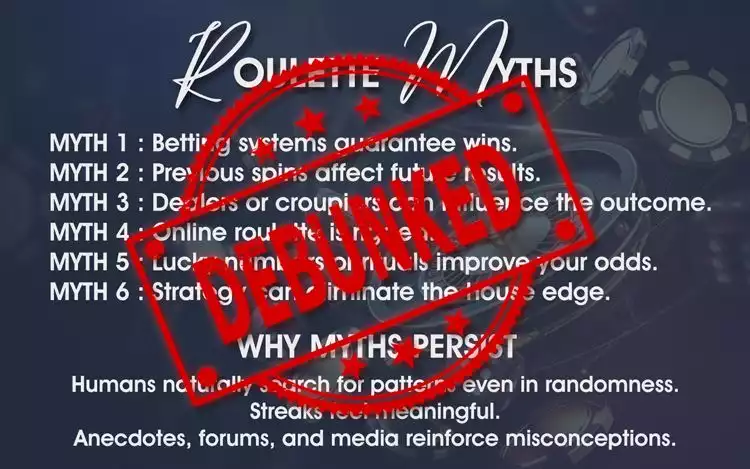
Why Roulette Myths Persist
So, if these beliefs are so easily disproved, why do they endure? The answer lies in psychology. Humans naturally look for patterns—even in random data. Winning streaks feel meaningful, and superstition offers a sense of control in an unpredictable game.
The influence of online forums, anecdotal “success stories,” and media portrayals also keeps these ideas alive. However, the UK’s rigorous standards for fair and responsible play ensure that no strategy or ritual changes the outcome. The best approach is understanding the odds, setting clear limits, and enjoying roulette for its design—not its myths.
Conclusion – The Real Key to Enjoying European Roulette
Roulette myths may make for exciting stories, but understanding the game’s true mechanics builds lasting confidence.
Key Takeaways:
- Betting systems and streak tracking don’t influence real odds
- Dealer skill and wheel bias are neutralized through regulation
- RNG audits keep online roulette statistically consistent
- Superstition can enhance fun but not results
- Knowledge, not luck, leads to smarter play decisions
For more on European roulette fairness and game structure, explore related guides likeThe Impact of the House Edge in European Roulette and Why the Single Zero Reduces the House Edge.
If you choose to play, stick to UKGC-licensed operators such as Prime Casino and make use of available responsible gaming tools.