Published: 12 Nov 2025 | Updated: 27 Jan 2026


Not in the sense of predicting outcomes but in how players approach the game as every spin remains random and mathematically independent.
French Roulette encourages structured, disciplined play through its design, pace, and terminology. Its distinctive table layout, slower rhythm, and special rules — La Partage and En Prison — make it a variant where strategy means managing decisions, not manipulating odds.
This guide examines French Roulette from an educational perspective—covering its rules, how players discuss “strategies,” and why this version is often approached more methodically in both online and live settings.
What you’ll learn in this guide:
- What makes French Roulette feel more structured compared to other variants
- Key rules: La Partage and En Prison, and how they affect even-money bets
- How betting systems are discussed in practice (without changing odds)
- The role of bankroll management and responsible play
French Roulette is often described as the most traditional and methodical version of the game. While no form of roulette can be “beaten” through prediction, the French format, whether RNG-based or live roulette, stands apart for how it handles even-money bets and promotes thoughtful, rule-based play.
|
Disclaimer: This article discusses roulette structure and widely known betting systems for informational purposes only. It does not promote gambling, suggest improved outcomes, or imply that strategies can influence results. All roulette spins — whether online or live — are determined by chance using certified RNG systems or audited physical wheels. 18+ | Play Responsibly. Support available at BeGambleAware.org. |
Why French Roulette Encourages Strategic Thinking
Among all roulette variants, French roulette is the most deliberate. Its design rewards awareness, patience, and discipline.
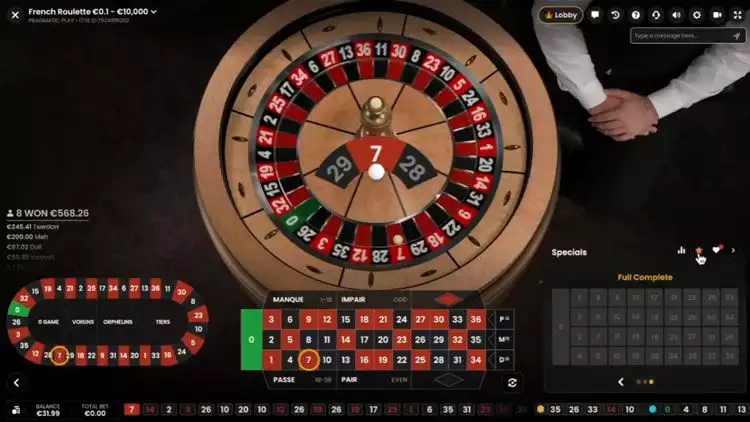
Traditional French tables use French-language labels such as Pair (even), Impair (odd), and Manque (1–18). They also feature two mirrored betting areas, letting multiple players reach comfortably. The atmosphere is calmer, more measured, and grounded in classic casino etiquette.
Where call bets fit into this structure
French roulette also introduces unique call bets tied to the wheel’s physical layout, not the betting grid:
- Voisins du Zéro – covering numbers closest to zero on the wheel
- Tiers du Cylindre – covering the opposite side (“third of the wheel”)
- Orphelins – the remaining numbers between these two major sectors
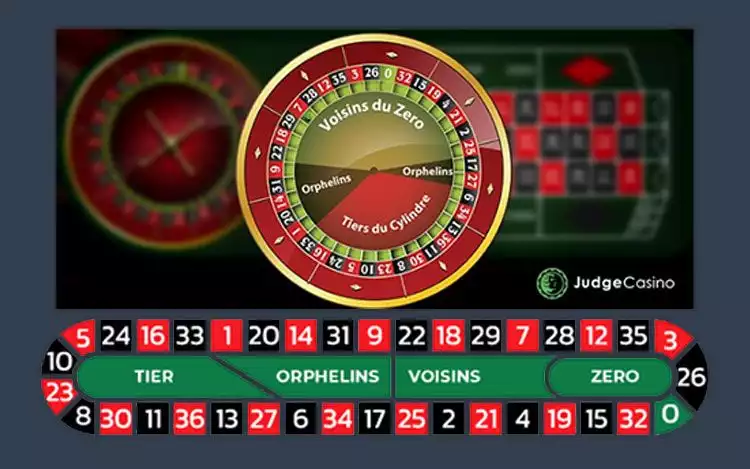
These traditional groupings do not influence outcomes, but they:
- reinforce the game’s structured, methodical feel
- provide a cultural and mathematical lens for understanding wheel geometry
- add depth to the way experienced players discuss pacing and bet placement
That slower rhythm — paired with these predefined sectors — changes the mindset. Players often take time to weigh decisions or adjust bet sizes based on session goals. This doesn’t make outcomes any more predictable, but it supports more deliberate risk management.
The Role of La Partage and En Prison in Strategic Play
The real strategic distinction lies in two unique rules that define French roulette’s fairness: La Partage and En Prison.
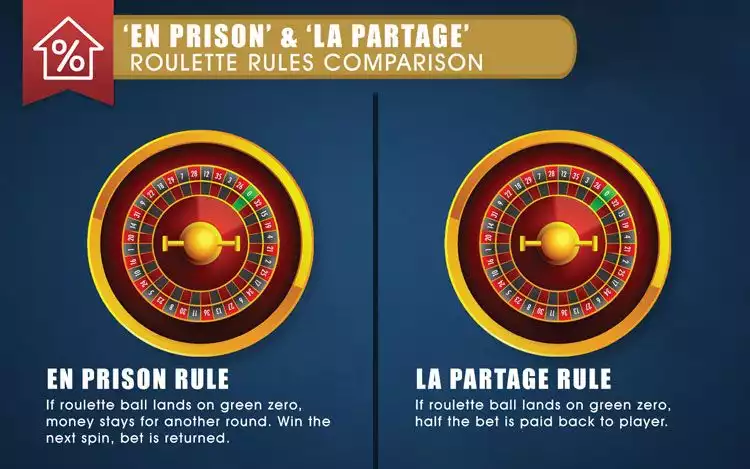
La Partage
When the ball lands on zero, players lose only half of their even-money bets (Red/Black, Odd/Even, High/Low). The other half is returned automatically.
This effectively cuts the house edge on those bets from 2.70% to 1.35%, making French roulette the most statistically favourable version of the game.
En Prison
A variant of La Partage, this rule “locks” even-money bets after a zero. On the next spin, if your bet wins, your entire stake is returned. If it loses, you forfeit it.
While the expected return is mathematically identical to La Partage, the pacing feels more interactive — players get a second chance instead of an immediate half refund.
Both rules influence player behaviour by reducing volatility. For example, in 100 even-money spins, a few La Partage outcomes can reduce the pace of losses on even-money bets.
We’ll explore the mathematics behind this in your upcoming article “How the ‘La Partage’ Rule Affects Your Odds” — but for now, the key takeaway is simple: these rules don’t help you win more often, but they help you lose more slowly.
Common Betting Systems in French Roulette
French roulette’s pacing and rule set make it a natural fit for structured betting frameworks — though it’s important to stress that no system can overcome the house edge.
Martingale System
Perhaps the most famous. Players double their bet after each loss, aiming to recover when they eventually win.
In French roulette, La Partage slightly softens Martingale’s risk curve, because not every loss is total — some spins return half your stake.
⚠️ However, the system still carries the risk of hitting table limits or exhausting your bankroll during long losing streaks.
Fibonacci System
Instead of doubling, bets follow the Fibonacci sequence (1, 1, 2, 3, 5, 8…). This slower progression makes it less risky, especially with La Partage protection. It’s ideal for even-money bets where losses are partially recovered over time.
D’Alembert System
This method increases the stake by one unit after a loss and decreases it by one after a win. It aligns perfectly with the measured tempo of French roulette, helping to maintain balance without sharp fluctuations.
Each system is more about discipline than prediction. They help control pacing, not probability.
For structured guidance on bankroll-friendly play, visit the best roulette strategy guide.
Bankroll Management — The True Strategy
The most reliable “strategy” in any roulette game is not about patterns or systems — it’s about bankroll management.
French roulette’s reduced volatility allows smaller bets to last longer, offering a sense of stability that fast-paced American or European tables lack. Practical steps include:
- Setting a maximum session budget before you start.
- Deciding a “loss limit” (e.g., 20 spins or 10% of bankroll).
- Using bonus offers strategically — only when wagering requirements apply to roulette play.
Most importantly, always play responsibly. The slower rhythm of French roulette makes it easier to maintain awareness of time, spend, and emotion — vital aspects of responsible gaming.
Comparing Strategy Potential Across Variants
[Insert table intro]
|
Variant |
Strategic Complexity Depth |
Why It Matters |
|
French Roulette |
★★★★★ |
La Partage/En Prison reduce volatility and reward disciplined pacing. |
|
European Roulette |
★★★★☆ |
Single-zero design, faster play, no loss protection. |
|
American Roulette |
★★☆☆☆ |
Double zero increases house edge (5.26%) and randomness. |
French roulette’s real strength lies in how its structure encourages responsible, methodical play — not in providing an edge that defies mathematics.
Responsible Play and Modern Options
Modern live dealer studios preserve the traditional layout, etiquette, and pace that define French roulette. The experience — croupiers, French call bets, and calm rhythm — mirrors the atmosphere of Monte Carlo.
For flexibility, certified mobile app versions replicate the same odds and rules, allowing you to enjoy the game wherever you are under UKGC fairness certification.
Whether you prefer digital or live formats, the principle remains the same: French roulette rewards awareness, not aggression.
Conclusion – Structure Is the Strategy
French roulette stands apart not because it promises more wins, but because it gives players more control over how they play.
Its slower rhythm, thoughtful layout, and player-friendly rules create a game that values pacing and presence over impulse.
Key takeaways:
- The La Partage and En Prison rules don’t change outcomes — they change the experience of loss.
- French roulette rewards patience, planning, and moderation.
- True strategy lies not in beating the wheel but in understanding its design.
“In French roulette, structure is strategy — a reminder that managing risk is the real art of the game.”
To dive deeper into how these rules work mathematically, read our follow-up:
➡️How the “La Partage” Rule Affects Your Odds
Readers can explore more information about French roulette formats on UKGC-licensed platforms such as Prime Casino.